
How bright should office lighting be?
For general office tasks, the recommended lighting level is 500 lux. Lighting needs can vary depending on the activity – from archives and toilets requiring lower lux levels, to design offices and technical drawing areas needing much higher illumination.
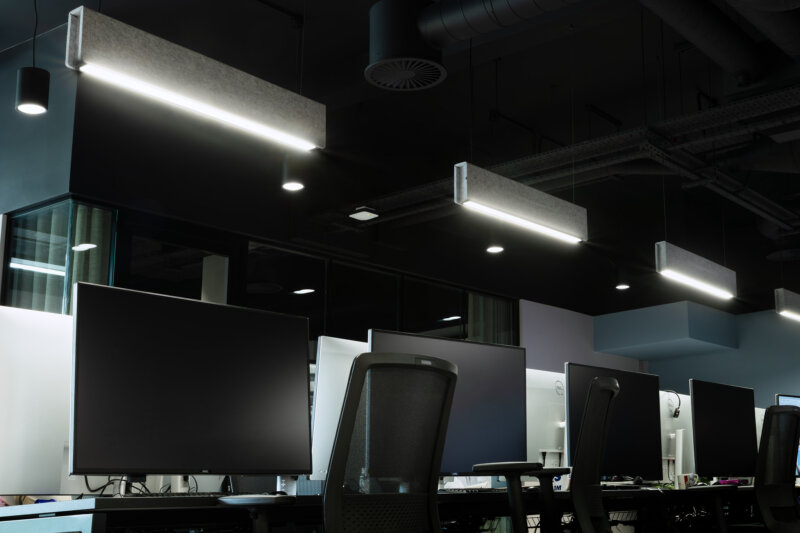
For general office tasks, the recommended lighting level is 500 lux. Lighting needs can vary depending on the activity – from archives and toilets requiring lower lux levels, to design offices and technical drawing areas needing much higher illumination.
Read on to discover the full lux recommendations for different office areas and tasks, and learn more about what lux is and how it affects comfort, productivity, and wellbeing.

Office Lighting
What should the lux level be in an office?
Lux is the unit to show the intensity of light hitting a surface, such as a wall or floor, in a lighting design. One lux is equivalent to one lumen per square meter. Lumens show how bright the light source is, while lux measures the actual light that hits a surface. One lux equals one lumen per square meter.
Lux levels are also known as illumination. The effectiveness of illumination can be affected by factors including light quantity & quality, contrast, amount of flicker, shadows, and intensity of glare.
The larger the room/area, the more lumens the luminaires need to give in order to create sufficient light levels. These can change when other factors enter the equation, such as natural light and the purpose of the room.
When it comes to offices and other workplaces, it is the employer’s legal responsibility, according to Regulations 1992 Workplace (Health, Safety and Welfare), regulation 8, to provide “suitable and sufficient lighting” to their employees.
Insufficient light (low lux levels) is a common cause of fatigue and muscle strain. This becomes more likely if the exposure is consistent over longer periods of time. On the other hand, excessively high lux levels can distract and cause distress or even impair people’s vision.
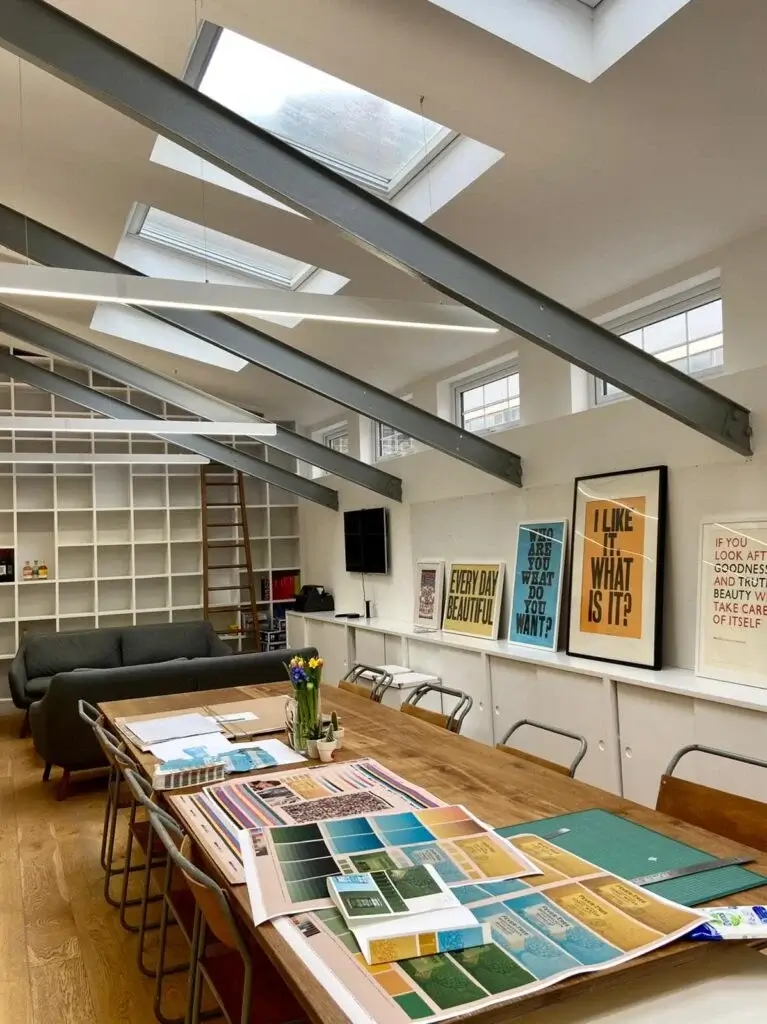
How much lighting do you need in an office lighting project?
According to the standard EN 12464 Light and lighting – Lighting of workplaces -Indoor workplaces, the light level recommended for office work is the range 500 – 1000 lux. This depends on the activity, being higher for detailed tasks. For ambient lighting, the minimum illuminance is 50 lux for walls and 30 lux for ceilings.
What should the lux level be in an office?
Here are the recommendations according to the different tasks that might be performed in an office environment:
| Office Area | Lux Level Recommendation |
| Archives | 200 Lux |
| Toilets | 250 Lux |
| Reception desk | 300 Lux |
| Filing/copying/printing | 300 Lux |
| General office | 500 Lux |
| Conference room | 500 Lux |
| CAD workstation | 500 Lux |
| Technical drawing area | 750 Lux |
| Design office | 1000 Lux |
Recommended illuminance levels from EN 12464-1.
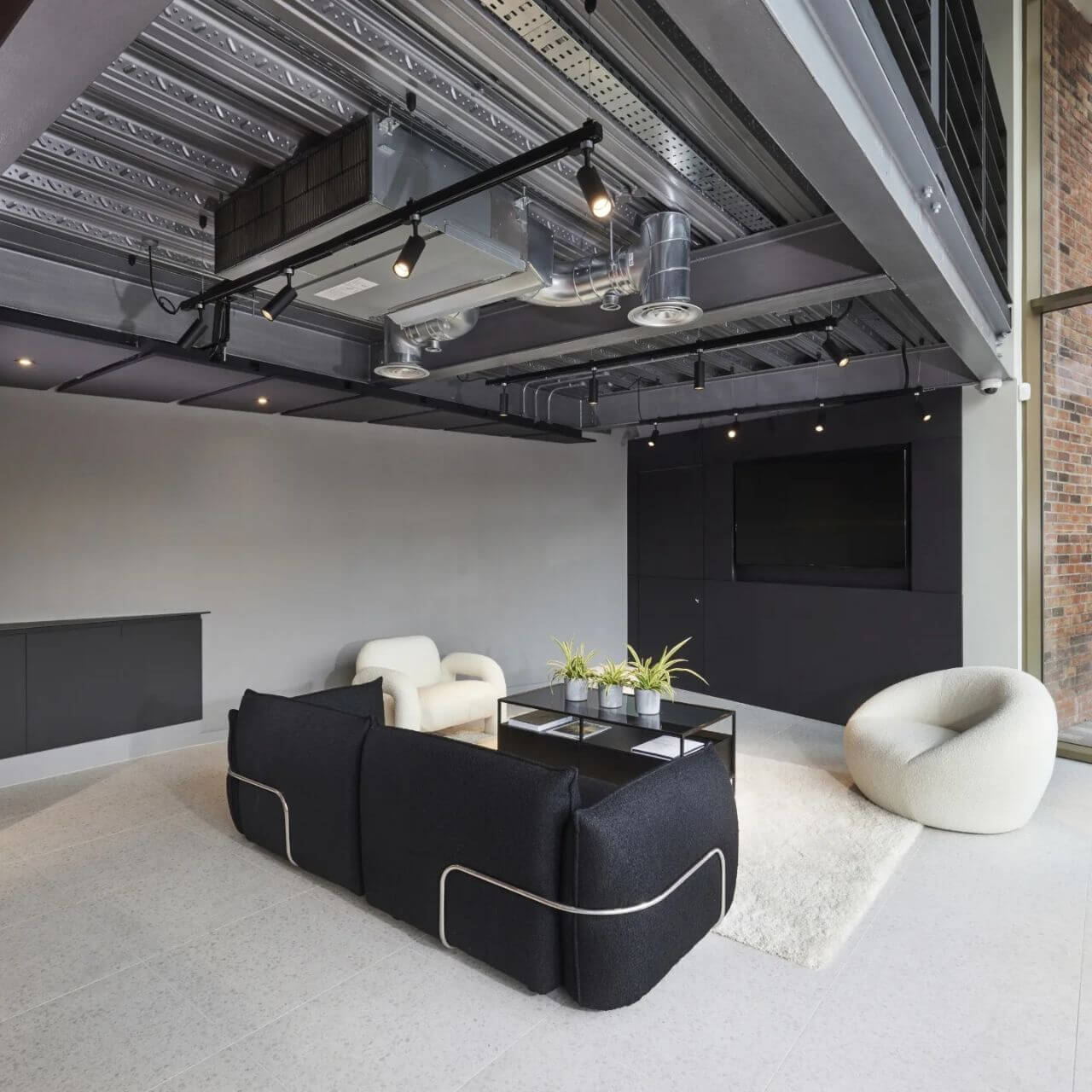
The Estates Department should measure the lux levels in an office using the above limits to confirm that an area is sufficiently lit according to the standards. This would be appropriate at the time of installation when it comes to a new building. These guidelines could imply changes to the existing lighting scheme, especially when there are people with visual impairments. Occupational Health or Access to Work is entitled to advise regarding the necessary changes. Alteration of the existing lighting provision must not take place without approval from the Estates Department. An exception is where tablets or touchscreen desktop computers are commonplace, as it is extremely difficult to provide a lighting design that reduces reflections and glare where these are used.
Speak to the experienced Ricoman lighting team, and we can provide a lighting scheme that balances the regulation with your company’s individual needs.
Meet our latest office lighting design project here: Betfred Headquarters Lighting
Keep up with our updates and news by following us on LinkedIn.
Your questions answered.
Is 500 lux measured on the desk surface, or across the whole room?
It’s a workplane/task-surface target, not a room-average reading. A room can feel bright to the eye while a desk in the corner still sits under 500 lux, because ambient light and task-surface lux are measured differently. That’s why ambient minimums (50 lux for walls, 30 lux for ceilings) are tracked separately from task-specific figures like the 500 lux general office target.
Does natural daylight count toward meeting these lux targets?
Daylight does affect how much artificial lux a space actually needs, but there’s no fixed offset you can apply — a desk near a south-facing window and one in an internal core need very different artificial contributions to hit the same effective lux. Daylight contribution is properly assessed as part of a full lighting design rather than assumed, which is why Ricoman’s lighting design team verifies lux levels on-site rather than relying on spec-sheet lumen output alone.
Do lux requirements change for employees with visual impairments?
Yes. Visual impairment can justify changes to an existing lighting scheme, with Occupational Health or Access to Work able to advise on what’s needed. Any change still requires Estates Department approval before work goes ahead — it isn’t something to alter unilaterally.
What’s a practical example of these lux levels applied to a real project?
Ricoman’s Betfred Headquarters project is a recent office lighting scheme delivered by their design team, applying this kind of lux-zoning to a live commercial fit-out.
Does a higher lux level always mean better lighting?
No. Excessively high lux levels can cause distraction, distress, or even impair vision, just as insufficient lux causes fatigue and muscle strain. The 500–1000 lux range for office work is a task-appropriate band, not a “more is better” scale.
Office Lighting Lux levels
Let’s light your next project
Tell us what you’re working on — we’ll design, make and deliver the lighting, start to finish.
More from the journal
Get more lighting insights
Project stories, product launches and specifier know-how — straight to your inbox. No spam, unsubscribe anytime.