
Colin, Our North West Consultant, Picks His Top 3 Commercial Downlights
Looking for commercial LED downlights for a lighting project? Colin Shockledge, Ricoman's North West Specification and Partnership Consultant, shares his top three downlight ranges and explains where he would use each one. We asked Colin to name his favourite downlight range and tell us where he would use it.
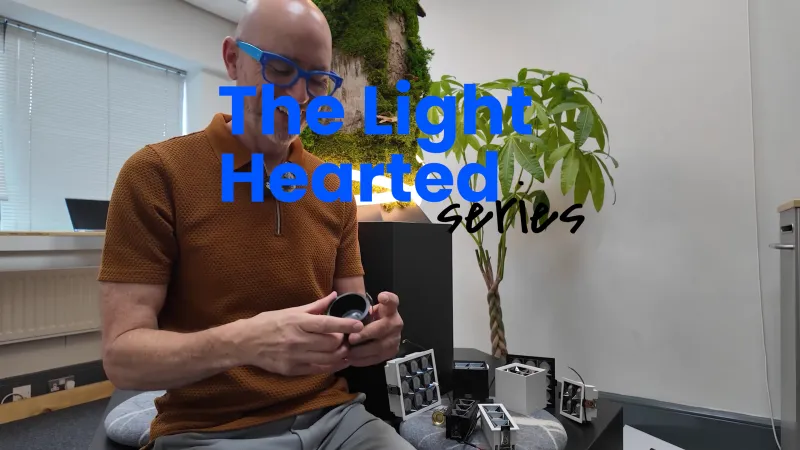
Looking for commercial LED downlights for a lighting project? Colin Shockledge, Ricoman’s North West Specification and Partnership Consultant, shares his top three downlight ranges and explains where he would use each one.
We asked Colin to name his favourite downlight range and tell us where he would use it.
On the face of it, a simple question. A downlight is a downlight, right?
That assumption is the first thing Colin takes apart.
He covers the North West for Ricoman, so he spends his weeks with specifiers, contractors and wholesalers, and he judges a commercial downlight on several fronts, such as its aesthetics, its technical function and its overall build quality. Which one leads depends on whether the fitting is meant to be noticed or to disappear. Here are the three ranges he keeps coming back to, and how he decides between them.
Colin’s three picks: Mosaic where the ceiling should stay clean, Neptune where the space is working harder, E-Pro where the fitting is meant to be seen.
Prefer to read the transcript?
In a recent discussion with the marketing team, I was asked what my favourite downlight range was, and where I might use it in a lighting design.
On the face of it, quite a simple question. A downlight is a downlight, right?
Lighting products can be judged on a number of fronts. Aesthetics, technical function, or just overall build quality from a broader point of view. A light fixture can act as a task light, an accent light or an ambient light in the layering of a design. Sometimes you want a product to perform technically but not be noticed. Other times you want, above all else, for the product to be noticed.
So with this in mind, let’s look at some of the Ricoman downlights. It’s a given that they will all utilise efficient CRI 90 light engines, so we’ll concentrate more on practical placement.
I think the best place to start is with Mosaic. On first view, aesthetically quite striking, but in practice quite minimalist. Especially if you want a product which does not disrupt the clean lines of a ceiling surface. The trimless version, with its choice of reflector colours, is the ultimate tool for this. Add to that the fluted reflector and you have a beautiful aesthetic which softly flows with the interior design.
Then for practicality, a choice of beam angles and colour temperatures means the Mosaic is a powerful tool which can be used for task, accent or ambient lighting.
Another strand of this product is the different sizes it’s available in, and the different fittings, whether that’s a plaster-in version. It means there’s a product range a designer can use multiple times on the same design. It can be doing different jobs, different tasks, but ultimately you continue with the same theme, the same materials, but with different performance. Different beam angles, different colour temperatures, different colour trims.
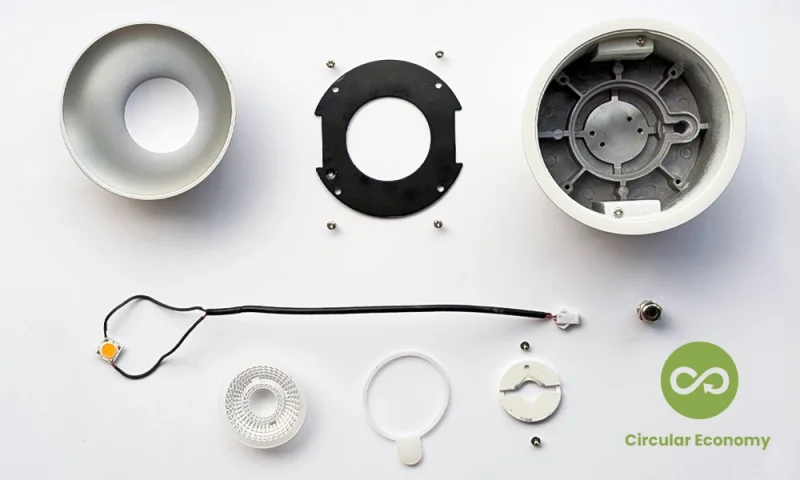
Next we look at the Neptune. For a more utilitarian space, this product excels. The engineer in me can’t help but admire the manufacturing quality and clever modularity of this product. A minimalist trim, IP65 and high efficiency. It’s a great addition to the lighting designer’s toolbox.
Again, a theme here at Ricoman, there is a nod to design, with multiple sizes ranging from 100mm cut out to 200mm, with different reflector finishes. Perfect as a task or ambient light.
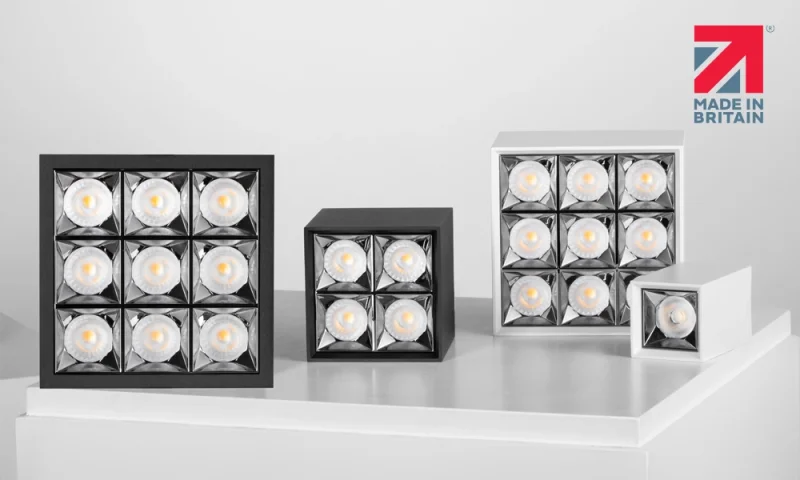
Then finally we look at the E-Pro. Very much a product to be seen. Unlike most other downlights, the E-Pro has a strong angular aesthetic. Visually bold, a beautiful cast body with sharp lines, varying scale and form factor. It can be used for both task and accent lighting, with its optical design offering precision and excellent glare control. E-Pro is actually a family of products, maintaining an aesthetic theme throughout a space, with its multiple forms of either recessed, surface or even track mounted versions.
Possibly my favourite.
So I’m Colin, and I’m the Specification and Partnership Consultant for Ricoman Lighting within the North West. So whatever your lighting needs, I’d be more than happy to help. Thank you for listening to the Lighthearted Series.
The Lighthearted Series
As part of our Lighthearted Series, we ask the Ricoman team for their expert take on lighting and everything around it. Colin talks us through his top three downlights, weighing up aesthetics, technical function and overall build quality.
Your favourite downlight? A simple question that is not simple
Aesthetics, technical function and build quality. Which one matters most changes from project to project, and often from room to room within the same project.
There is a second question sitting underneath it. In the layering of a design, a fitting might be doing the work of a task light, an accent light or an ambient light. Sometimes you want a product to perform technically and go unnoticed. Other times you want it noticed above all else.
That distinction is what separates Colin’s three picks.
Mosaic downlights: Best for clean, minimalist ceiling
Colin starts with Mosaic and describes it as striking on first view, minimalist in practice.
The benefit for a specifier is a ceiling that reads as a single clean surface. Where a project has been designed around uninterrupted lines, the trimless version removes the visual break a conventional flange creates, and the choice of reflector colours lets the aperture either recede or pick up a tone from the interior. Add the fluted reflector and you get a softer look that flows with the interior design rather than sitting on top of it.
That is the aesthetic case. The practical case is the range itself. A choice of beam angles and colour temperatures means the same fitting can be doing task lighting in one area, accent lighting in another and ambient lighting in a third. Multiple sizes and fitting types, including a plaster-in option, extend that further.
For a designer, that means one range can be used repeatedly across a single scheme without the ceiling looking repetitive. Same theme, same materials, different performance where the space needs it. It also makes the specification simpler to write and easier to hold together if the project changes shape later.
Explore the Mosaic downlight range
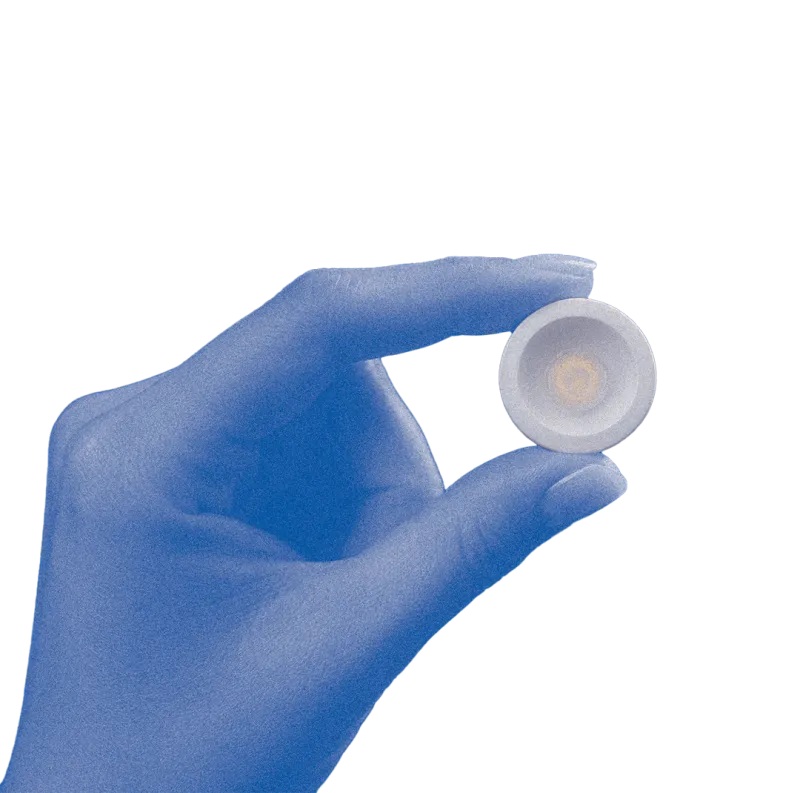
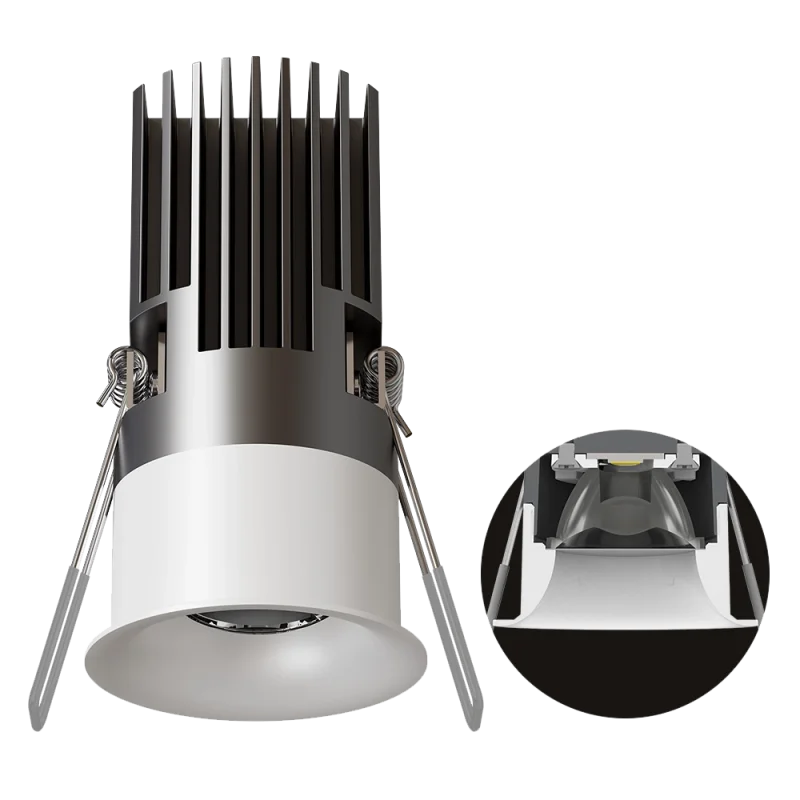
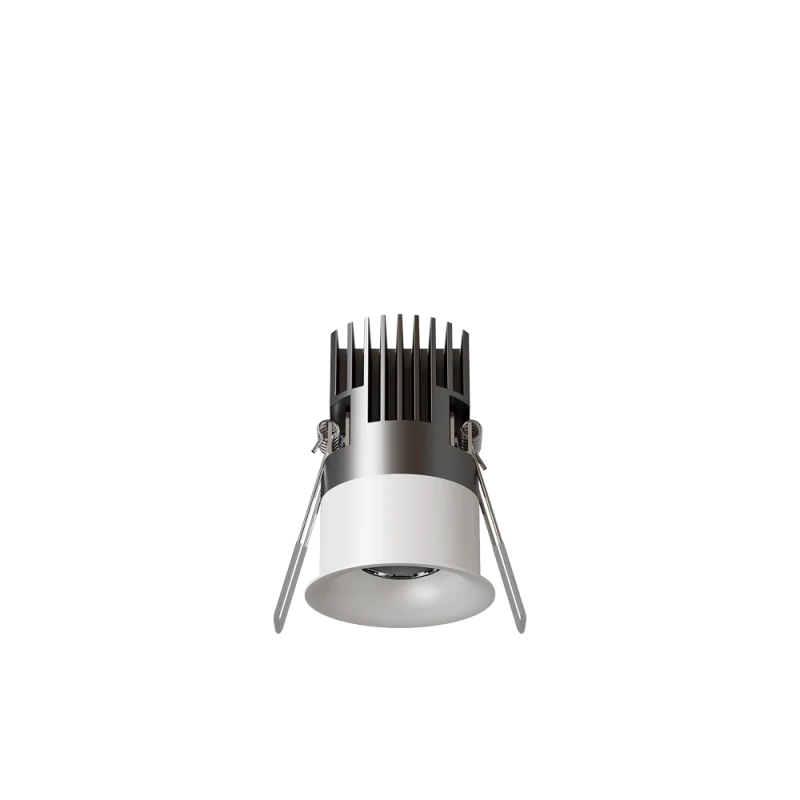
Neptune IP65 downlight: Best for demanding commercial spaces
Neptune is the choice for more utilitarian spaces, and Colin is open about why it appeals to him.
“The engineer in me cannot help but admire the manufacturing quality and clever modularity of this product.”
A minimalist trim, an IP65 rating and high efficiency make it a straightforward fitting to reach for where the environment is more demanding and the priority is light that works rather than light that draws attention.
There is still a nod to design. Multiple sizes running from a 100mm cut out up to 200mm, with different reflector finishes, mean it can be matched to the ceiling and the mounting height rather than forcing a compromise. It works as a task or ambient light.
Explore Neptune IP65 downlights.
E-Pro downlights: Best when the fitting should be seen
Then there is E-Pro, which Colin describes as very much a product to be seen.
Unlike most downlights, E-Pro has a strong angular aesthetic. It is visually bold, with a cast body, sharp lines and a varying scale and form factor. It suits task and accent lighting, and its optical design gives both precision and strong glare control, which is what lets it stay comfortable in a space where people are working on screens.
E-Pro is a family rather than a single fitting. Recessed, surface and track mounted versions mean the same visual language can run through a whole space, including areas where there is no ceiling void to recess into. For a specifier working across a mixed building, that consistency is the real benefit. You are not switching aesthetic every time the ceiling construction changes.
Colin’s verdict: “possibly my favourite”.
Explore the E-Pro downlights: recessed and surface mounted.
What this tells you about choosing a downlight
Three ranges, three different jobs. Mosaic for a clean, considered ceiling. Neptune where the space is working harder. E-Pro where the fitting is part of the design.
Lots of important things to consider. Our in-house lighting design team and our area consultants can help guide you to your ideal lighting solution. Send Ricoman your drawings or project requirements and our in-house lighting design team can recommend and specify a suitable lighting solution.
About Colin
Colin Shockledge is Specification and Partnership Consultant for Ricoman Lighting in the North West. If you have a lighting project in his area, he is happy to help.

Let’s light your next project
Tell us what you’re working on — we’ll design, make and deliver the lighting, start to finish.
Get more lighting insights
Project stories, product launches and specifier know-how — straight to your inbox. No spam, unsubscribe anytime.