
Lighting Glossary for UK Spaces
Ever wondered what all the lighting terms really mean? From lumens to CRI, understanding the basics can help you make the right choices for offices, retail spaces, and other commercial environments. This guide breaks down the key concepts to help you choose lighting that balances brightness, efficiency, and style.
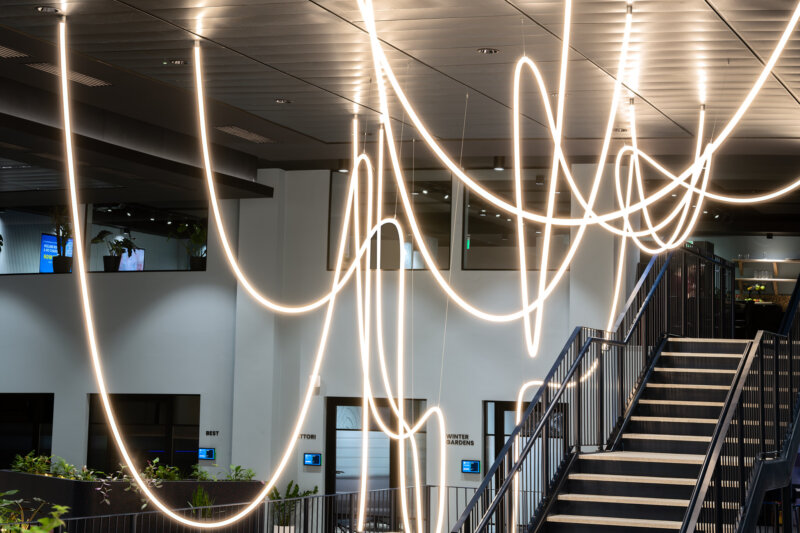
Ever wondered what all the lighting terms really mean? From lumens to CRI, understanding the basics can help you make the right choices for offices, retail spaces, and other commercial environments. This guide breaks down the key concepts to help you choose lighting that balances brightness, efficiency, and style.
Lumens (lm)
Lumens measure the total amount of visible light a source emits. The higher the lumens, the brighter the light. For commercial spaces like offices or retail stores, choosing the right lumen output ensures areas are well-lit without wasting energy.
Watts (W)
Watts indicate the amount of power a light consumes. While older lighting relied on watts as a rough measure of brightness, modern LEDs are more efficient, producing higher lumens with lower wattage. Understanding watts helps businesses estimate energy use and running costs.
Efficacy (lm/W)
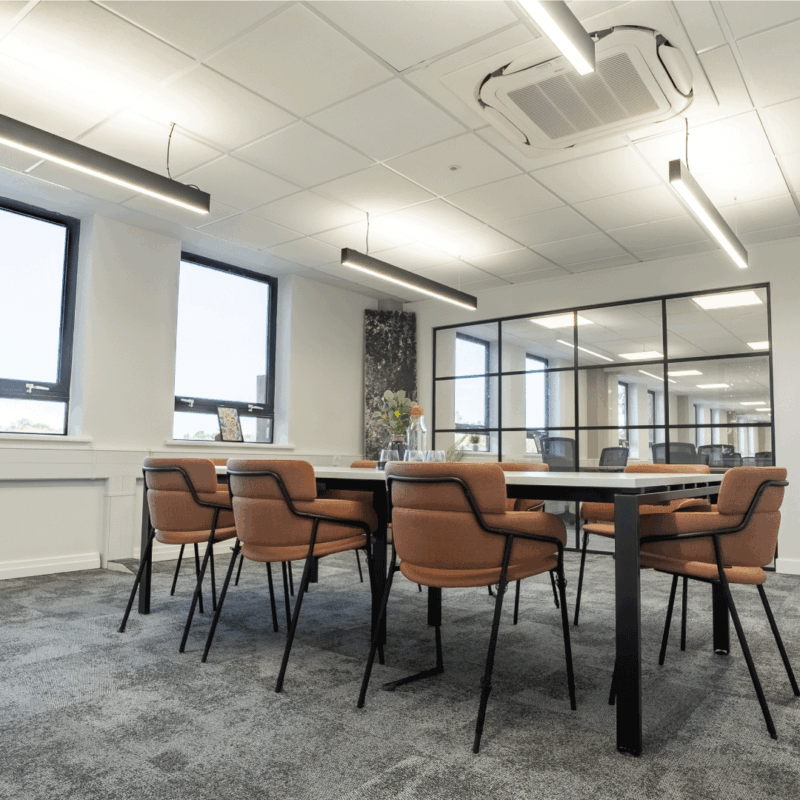
Efficacy measures how efficiently a light source converts electricity into visible light. The higher the lumens per watt (lm/W), the more energy-efficient the fixture. High-efficacy lighting is especially important for UK commercial projects looking to reduce electricity bills and carbon footprint.
Color Temperature (K)
Measured in Kelvin, color temperature affects how warm or cool a light appears. Warm white (2700-3000K) creates a cozy, inviting atmosphere, neutral or cool white (3500–4000K) works well for offices, and daylight (5000K+) is crisp and bright, ideal for detailed tasks or retail displays. Our Flow + range is available in 3000K and 4000K.
Color Rendering Index (CRI)
CRI is a scale from 0 to 100 that shows how accurately a light source reveals colors compared to natural daylight. A CRI over 90 is considered excellent, ensuring product displays, office interiors, or artwork appear vibrant and true-to-life.
Beam Angle
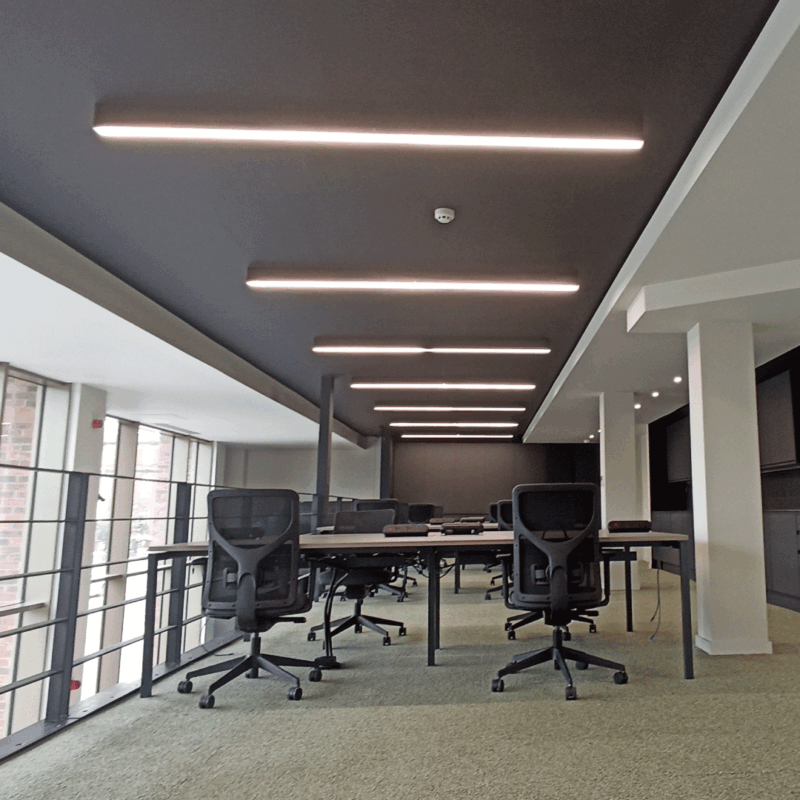
Beam angle describes how light spreads from a fixture. Narrow angles are ideal for spotlights or highlighting features, while wide angles work for general illumination. Selecting the right beam angle ensures your space is lit evenly and highlights the right areas.
Lux (lx)
Lux measures the amount of light falling on a surface (1 lux = 1 lumen per square metre). Understanding lux helps determine how bright a space will feel and ensures lighting meets practical requirements, like workstations or display areas in retail environments. Read more about the difference between lux and lumens here.
Luminaire
A luminaire is the complete lighting fixture, including the lamp, housing, and any electrical components. Choosing the right luminaire affects both the look of a space and how effectively the light is distributed.
LED (Light Emitting Diode)
LEDs are highly efficient semiconductor devices that produce bright, long-lasting light with low energy consumption. They are ideal for UK commercial lighting projects because of their durability, efficiency, and flexibility.
Ballast / Driver
Ballasts and drivers regulate the electrical current supplied to fluorescent or LED lamps, ensuring safe operation and consistent performance. Choosing quality components is critical for long-lasting, reliable lighting.
IP Rating
The IP (Ingress Protection) rating indicates a fixture’s resistance to dust and water. Higher ratings are required for bathrooms, kitchens, or outdoor commercial areas, ensuring the lighting is durable and safe. Our Aquavance range offers a high IP rating.
Dimmable Lighting
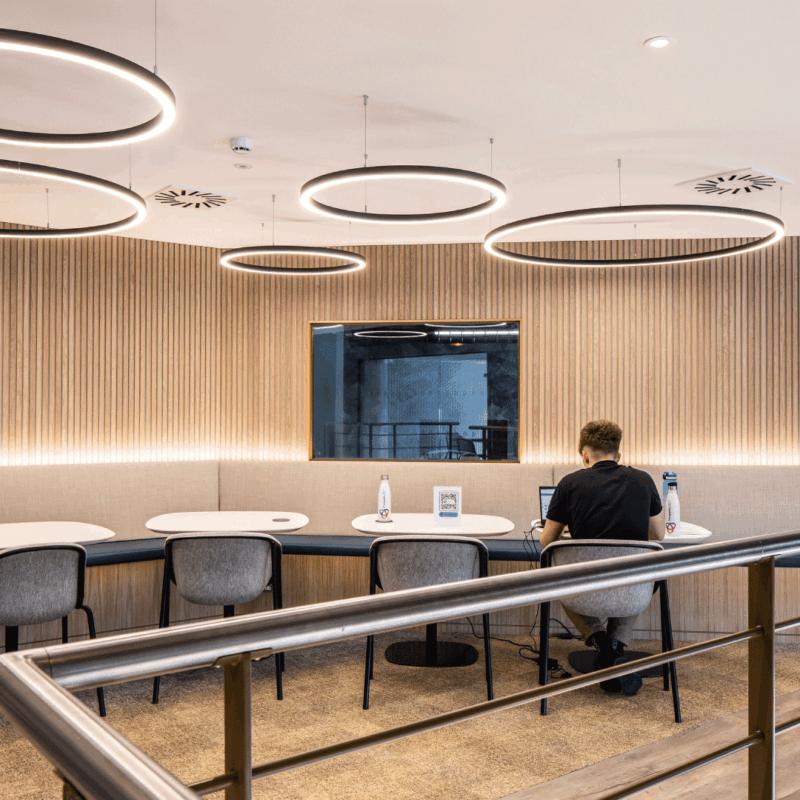
Dimmable fixtures allow you to adjust brightness to suit different tasks or moods. In offices, retail, or hospitality, dimmable lighting can improve comfort, enhance displays, and reduce energy consumption.
Types of Lighting
- Ambient lighting provides general illumination for the whole space.
- Task lighting focuses on specific areas for work, reading, or detailed activities.
- Accent lighting highlights products, artwork, or architectural features to add depth and style.
We offer a complimentary lighting design service to help you find the right solution for your space. If you’re not familiar with lighting terminology or just want some expert guidance, our designers can take care of the details for you.
Let’s light your next project
Tell us what you’re working on — we’ll design, make and deliver the lighting, start to finish.
More from the journal
Get more lighting insights
Project stories, product launches and specifier know-how — straight to your inbox. No spam, unsubscribe anytime.